Specific Applications of Plasma Cleaners
Jul 02, 2025
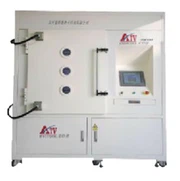
Plasma cleaning/etching machines generate plasma by placing two electrodes in a sealed container to create an electric field. A vacuum pump is used to maintain a certain vacuum level. As the gas becomes increasingly rarefied, the distance between molecules and the free movement of molecules or ions also increases. Under the influence of the electric field, these ions collide and form plasma. These ions are highly reactive, with enough energy to break almost all chemical bonds, inducing chemical reactions on any exposed surface. Different gas plasmas have different chemical properties. For example, oxygen plasma is highly oxidizing, capable of oxidizing photoresist to produce gas, thus achieving a cleaning effect. Corrosive gas plasma has excellent anisotropy, which meets the requirements of etching. Plasma treatment produces a glow, hence the name glow discharge.
The mechanism of plasma cleaning relies primarily on the "activation" of active particles in the plasma to remove surface stains. In terms of the reaction mechanism, plasma cleaning generally involves the following process: inorganic gases are excited into a plasma state; gaseous substances are adsorbed onto the solid surface; the adsorbed groups react with molecules on the solid surface to form product molecules; the product molecules decompose into the gas phase; and the reaction residues are removed from the surface.
The most significant feature of plasma cleaning technology is that it can treat any substrate type, including metals, semiconductors, oxides, and most polymer materials such as polypropylene, polyester, polyimide, polyvinyl chloride, epoxy, and even polytetrafluoroethylene. It can clean both the entire surface and specific areas, as well as complex structures.