

What kind of gas is used in vertical plasma equipment?
Nov 26, 2025
As a leading supplier of vertical plasma equipment, I often get asked about the types of gases used in these machines. Vertical plasma equipment is widely used in various industries, including semiconductor manufacturing, printed circuit board (PCB) production, and flexible printed circuit (FPC) fabrication. The choice of gas plays a crucial role in determining the performance and efficiency of the plasma treatment process. In this blog post, I will discuss the different types of gases commonly used in vertical plasma equipment and their applications.
1. Oxygen (O₂)
Oxygen is one of the most commonly used gases in vertical plasma equipment. It is a highly reactive gas that can effectively remove organic contaminants from the surface of materials. When oxygen is introduced into the plasma chamber, it dissociates into oxygen radicals (O•) and ions (O⁺). These reactive species react with organic molecules on the surface, breaking them down into smaller volatile compounds that can be easily removed from the chamber.
In the PCB and FPC industries, oxygen plasma is used for desmearing and surface activation. Desmearing is the process of removing resin smears from the drilled holes in PCBs and FPCs. Oxygen plasma can penetrate deep into the holes and break down the resin smears, ensuring good electrical contact between the copper traces and the drilled holes. Surface activation, on the other hand, involves modifying the surface properties of the material to improve adhesion. Oxygen plasma can introduce polar functional groups on the surface, increasing the surface energy and improving the wetting and adhesion of subsequent coatings or adhesives.
2. Nitrogen (N₂)
Nitrogen is another commonly used gas in vertical plasma equipment. It is an inert gas that can be used as a carrier gas or a diluent. As a carrier gas, nitrogen helps to transport other reactive gases into the plasma chamber and maintain a stable plasma environment. As a diluent, nitrogen can be mixed with other reactive gases to control the plasma density and reactivity.
In some applications, nitrogen plasma can also be used for surface modification. Nitrogen plasma can introduce nitrogen-containing functional groups on the surface, improving the surface hardness, wear resistance, and chemical stability of the material. For example, in the semiconductor industry, nitrogen plasma is used for passivation of silicon surfaces to prevent oxidation and improve the electrical performance of the devices.
3. Argon (Ar)
Argon is an inert gas that is widely used in vertical plasma equipment. It is often used as a sputtering gas or a cleaning gas. As a sputtering gas, argon ions are accelerated towards the target material in the plasma chamber, knocking out atoms from the target surface and depositing them on the substrate. This process is called physical vapor deposition (PVD) and is used for depositing thin films of metals, alloys, and ceramics on various substrates.
As a cleaning gas, argon plasma can be used to remove contaminants from the surface of materials by physical sputtering. Argon ions bombard the surface, dislodging the contaminants and cleaning the surface. Argon plasma is particularly effective for removing inorganic contaminants such as metal oxides and particles.
4. Hydrogen (H₂)
Hydrogen is a reactive gas that is used in some vertical plasma equipment applications. It is often used for reducing metal oxides and removing organic contaminants. When hydrogen is introduced into the plasma chamber, it dissociates into hydrogen radicals (H•) and ions (H⁺). These reactive species can react with metal oxides on the surface, reducing them to metals and removing the oxygen. Hydrogen plasma can also react with organic contaminants, breaking them down into smaller volatile compounds.
In the semiconductor industry, hydrogen plasma is used for cleaning and passivation of silicon surfaces. Hydrogen plasma can remove native oxides from the silicon surface and passivate the dangling bonds, improving the surface quality and electrical performance of the devices. In the PCB and FPC industries, hydrogen plasma can be used for desmearing and surface activation, similar to oxygen plasma.
5. Fluorinated Gases (e.g., CF₄, SF₆)
Fluorinated gases such as tetrafluoromethane (CF₄) and sulfur hexafluoride (SF₆) are often used in vertical plasma equipment for etching and cleaning applications. These gases are highly reactive and can etch a wide range of materials, including silicon, silicon dioxide, and polymers.
When fluorinated gases are introduced into the plasma chamber, they dissociate into fluorine radicals (F•) and ions (F⁺). These reactive species react with the material surface, etching away the material and creating the desired patterns or structures. Fluorinated gases are commonly used in the semiconductor industry for dry etching of silicon wafers to create integrated circuits. In the PCB and FPC industries, fluorinated gases can be used for etching copper traces and removing photoresist.
6. Other Gases
In addition to the above gases, other gases such as helium (He), carbon dioxide (CO₂), and ammonia (NH₃) can also be used in vertical plasma equipment depending on the specific application requirements. Helium is an inert gas that can be used as a carrier gas or a diluent, similar to nitrogen. Carbon dioxide can be used for surface modification and cleaning, as it can react with organic contaminants and introduce oxygen-containing functional groups on the surface. Ammonia can be used for surface activation and passivation, as it can introduce nitrogen-containing functional groups on the surface.
Choosing the Right Gas
The choice of gas for vertical plasma equipment depends on several factors, including the type of material to be treated, the desired surface modification or treatment process, and the equipment specifications. In general, a combination of gases may be used to achieve the best results. For example, a mixture of oxygen and nitrogen can be used for surface activation and cleaning, while a mixture of argon and fluorinated gases can be used for etching.
As a supplier of vertical plasma equipment, we offer a wide range of gas options and can provide customized solutions based on your specific requirements. Our Seven Layers Vertical Plasma Equipment, PCB Vertical Plasma Equipment, and FPC Vertical Plasma Equipment are designed to work with different gases and can be configured to meet your specific application needs.

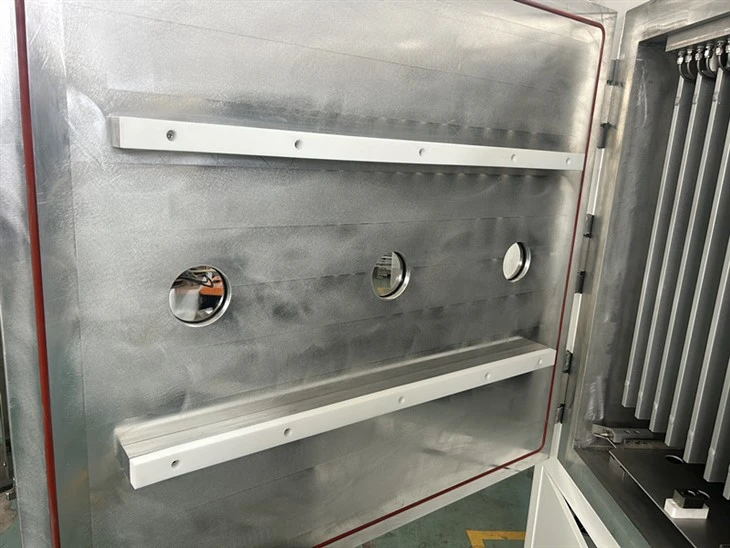
If you are interested in learning more about our vertical plasma equipment or need help choosing the right gas for your application, please feel free to contact us for a consultation. We are committed to providing high-quality equipment and excellent customer service to help you achieve your production goals.
References
- "Plasma Surface Treatment: Principles and Applications" by Yasuhiro Kogoma
- "Semiconductor Manufacturing Technology" by Stanley Wolf and Richard N. Tauber
- "Printed Circuit Board Technology" by Clyde F. Coombs Jr.