

What is the temperature change during the operation of Vacuum Inline RF Plasma Equipment?
Apr 16, 2026
Hey there! As a supplier of Vacuum Inline RF Plasma Equipment, I often get asked about the temperature changes that occur during the operation of this nifty piece of tech. So, let's dive right into it and explore what's going on with the temperature when our Vacuum Inline RF Plasma Equipment is up and running.
First off, let's understand the basics of how this equipment works. Vacuum Inline RF Plasma Equipment is used for a variety of surface treatment applications, like cleaning, etching, and coating. It uses radio - frequency (RF) energy to generate a plasma inside a vacuum chamber. The plasma consists of ions, electrons, and neutral particles that can interact with the surface of a material, modifying its properties.
When the equipment starts operating, the temperature changes are mainly influenced by a few key factors. One of the most significant factors is the RF power input. The higher the RF power, the more energy is being pumped into the plasma. This extra energy causes the particles in the plasma to move more vigorously, which in turn leads to an increase in temperature.
Think of it like a pot of water on a stove. The more heat you apply (equivalent to higher RF power), the faster the water heats up. In the case of our plasma equipment, the increased RF power makes the plasma particles collide more frequently and with greater force, generating heat.
Another factor that affects the temperature is the gas flow rate. The gas used in the plasma process, such as argon or oxygen, plays a crucial role. If the gas flow rate is too low, the heat generated in the plasma can't be effectively dissipated. This can cause the temperature inside the chamber to rise rapidly. On the other hand, if the gas flow rate is too high, it might cool down the plasma too much, affecting the efficiency of the treatment process.
The material being treated also has an impact on the temperature. Different materials have different thermal conductivities. For example, metals are generally good conductors of heat, so they can absorb and transfer heat quickly. When treating a metal surface with our Vacuum Inline RF Plasma Equipment, the heat generated in the plasma can be rapidly conducted away by the metal, resulting in a relatively stable temperature. In contrast, materials like plastics or ceramics have lower thermal conductivities. They may heat up more easily and retain the heat for longer periods, leading to larger temperature fluctuations.
Now, let's talk about the typical temperature range during the operation of Vacuum Inline RF Plasma Equipment. In most cases, the temperature inside the chamber can range from around 50°C to 200°C. However, this can vary depending on the specific application and the settings of the equipment.
For some delicate applications, like treating electronic components, we need to keep the temperature relatively low to avoid damaging the components. In these cases, we might use lower RF power and higher gas flow rates to maintain a temperature in the lower end of the range, say around 50 - 100°C.
On the other hand, for more robust applications, such as surface etching of metal parts, we can tolerate higher temperatures. The equipment can be set to operate at a higher RF power, which can push the temperature up to 150 - 200°C.
Monitoring the temperature during the operation is crucial. We usually use temperature sensors inside the chamber to keep track of the temperature. These sensors send real - time data to the control system of the equipment. If the temperature goes outside the desired range, the control system can adjust the RF power or the gas flow rate to bring the temperature back under control.

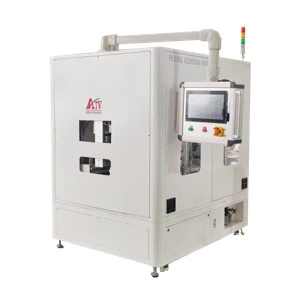
Let's take a look at some real - world examples. Suppose we're using our Vacuum Inline RF Plasma Equipment to clean the surface of a printed circuit board (PCB). PCBs are sensitive to heat, so we need to keep the temperature low. We set the RF power to a moderate level and increase the gas flow rate of argon. This helps to maintain a temperature of around 60 - 80°C, which is safe for the PCB while still effectively cleaning the surface.
In another scenario, if we're using the equipment for semiconductor applications, we might need to etch the surface of a silicon wafer. For this process, we can increase the RF power to achieve a higher etch rate. As a result, the temperature inside the chamber might rise to around 150 - 180°C. But we have to be careful not to overheat the wafer, as it can affect its electrical properties.
Our Vacuum Inline RF Plasma Equipment is also designed with cooling systems to manage the temperature. These cooling systems can be either water - cooled or air - cooled. Water - cooled systems are more efficient at removing heat, especially for high - power applications. They use a circulating water system to absorb the heat generated in the chamber and transfer it to a heat exchanger. Air - cooled systems, on the other hand, are simpler and more cost - effective for lower - power applications. They use fans to blow air over the components to dissipate the heat.
Now, let's touch on some related equipment. We also offer LCD RF Plasma Equipment and RF Plasma Equipment for Semiconductor Applications. These equipment have similar temperature - related considerations, but they are optimized for their specific applications.
If you're in the market for high - quality plasma equipment, whether it's our Vacuum Inline RF Plasma Equipment or other related products, we're here to help. We have a team of experts who can provide you with detailed information about the equipment, including temperature management, and help you choose the right solution for your needs. If you're interested in learning more or making a purchase, don't hesitate to reach out and start a conversation with us. We're looking forward to working with you!
References:
- Plasma Physics: An Introduction, by John Sheffield
- Handbook of Plasma Processing Technology: Principles, Techniques, and Applications, edited by Stephen M. Rossnagel, J. J. Cuomo, and W. D. Westwood