

What is the role of the vacuum system in LED RF Plasma Equipment?
Jun 15, 2026
Hey there! As a supplier of LED RF Plasma Equipment, I often get asked about the role of the vacuum system in this kind of equipment. Well, let's dive right in and break it down.
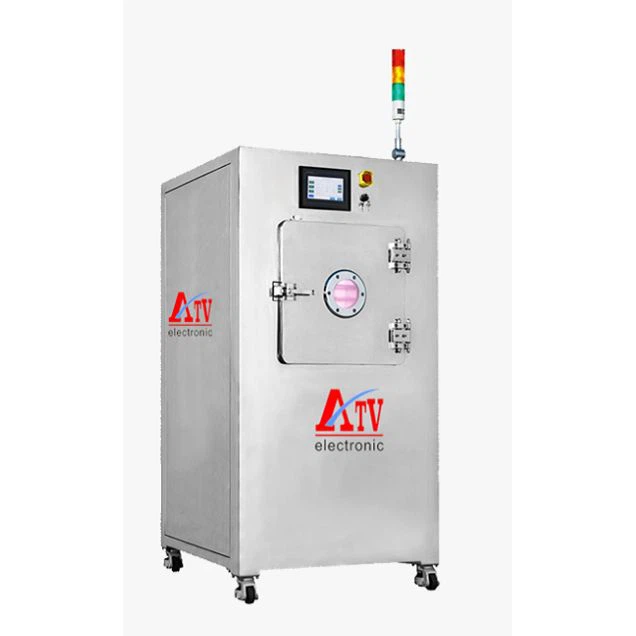
First off, what's LED RF Plasma Equipment anyway? It's a pretty cool piece of tech used in a bunch of industries, especially in semiconductor and LCD manufacturing. You can check out more about RF Plasma Equipment for Semiconductor Applications and LCD RF Plasma Equipment on our website.
Now, let's talk about the vacuum system. In LED RF Plasma Equipment, the vacuum system plays a super crucial role. You see, plasma is basically a gas that's been ionized, which means it has free electrons and ions floating around. To create and maintain this plasma state, we need to control the environment inside the equipment, and that's where the vacuum system comes in.
One of the main jobs of the vacuum system is to remove air and other unwanted gases from the plasma chamber. When we start with a clean slate, so to speak, by getting rid of the air, we can then introduce the specific gases we need to create the plasma. These gases are usually things like argon, oxygen, or nitrogen, depending on what kind of treatment or process we're doing.
For example, in semiconductor manufacturing, we might use argon plasma to clean the surface of a wafer. The argon ions in the plasma can knock off any contaminants on the wafer's surface, leaving it nice and clean for the next step in the manufacturing process. But if there's a bunch of air in the chamber, it can mess up the plasma and make the cleaning process less effective. That's why the vacuum system is so important – it helps us create a pure environment for the plasma to do its thing.
Another important aspect is that the vacuum system helps control the pressure inside the chamber. The pressure affects how the plasma behaves. Different processes require different pressures. Some processes work best at low pressures, while others need a slightly higher pressure. The vacuum system allows us to adjust and maintain the pressure at the optimal level for each specific process.
Let's say we're using our Vacuum Inline RF Plasma Equipment for a continuous production line. The vacuum system needs to be able to handle the constant flow of materials through the chamber while still maintaining the right pressure. This is a bit of a balancing act, but modern vacuum systems are designed to do just that.
The vacuum system also helps with the uniformity of the plasma. In LED manufacturing, for instance, we want the plasma to be evenly distributed across the surface of the LED substrate. If the pressure isn't consistent or there are pockets of air in the chamber, the plasma might be stronger in some areas and weaker in others. This can lead to uneven treatment of the substrate, which is a big no-no. The vacuum system helps ensure that the plasma is uniform throughout the chamber, resulting in high-quality LEDs.
Now, let's talk about the different types of vacuum pumps that are commonly used in LED RF Plasma Equipment. There are two main types: roughing pumps and high-vacuum pumps.
Roughing pumps are used to quickly remove the bulk of the air from the chamber. They can get the pressure down to a certain level relatively fast. But they're not usually able to achieve the very low pressures that we sometimes need for more precise processes. That's where the high-vacuum pumps come in.
High-vacuum pumps, like turbomolecular pumps or diffusion pumps, can take the pressure even lower. They work in tandem with the roughing pumps to create the ultra-low pressures required for some advanced plasma processes. These pumps are more expensive and require more maintenance, but they're essential for getting the best results.
In addition to creating and maintaining the plasma, the vacuum system also helps with the safety of the equipment. When the chamber is under vacuum, it reduces the risk of explosions or fires. Since there's less oxygen in the chamber, there's less chance of a combustible gas igniting. This is especially important when we're working with flammable gases in some plasma processes.
The vacuum system also helps protect the equipment itself. When there's less air and contaminants in the chamber, there's less wear and tear on the internal components of the equipment. This means the equipment will last longer and require less maintenance, which is a win for everyone.
So, as you can see, the vacuum system is an integral part of LED RF Plasma Equipment. It's not just a sidekick – it's a key player in making sure the equipment works effectively and efficiently.
If you're in the market for LED RF Plasma Equipment or have any questions about how the vacuum system works, don't hesitate to reach out. We're here to help you find the right solution for your specific needs. Whether you're in the semiconductor industry, LCD manufacturing, or any other field that uses plasma technology, we've got the expertise and the equipment to meet your requirements.
Let's start a conversation about how our LED RF Plasma Equipment can benefit your business. Contact us today to learn more and get started on improving your manufacturing processes.

References
- Smith, J. (2020). Plasma Technology in Semiconductor Manufacturing. Journal of Semiconductor Science.
- Johnson, A. (2019). Vacuum Systems in Plasma Equipment. Plasma Research Review.