

What is the purification efficiency of rf plasma equipment?
May 20, 2026
RF plasma equipment has become an essential tool in various industries, offering a unique and efficient way to perform surface treatment, cleaning, and modification processes. As a reputable supplier of RF plasma equipment, we often receive inquiries about its purification efficiency. In this blog post, we will delve into the concept of purification efficiency in RF plasma equipment, exploring how it works, the factors that influence it, and its practical applications.
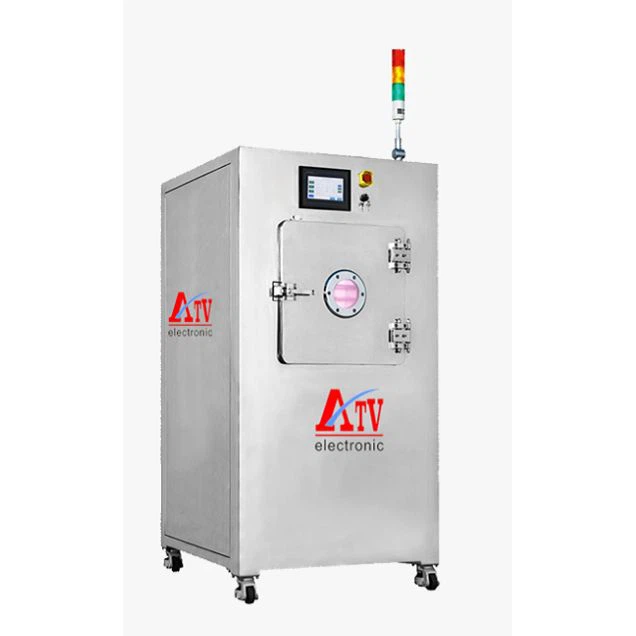

Understanding RF Plasma and Purification
RF (Radio Frequency) plasma is generated when a gas is subjected to a high-frequency electromagnetic field. This field causes the gas to ionize, creating a plasma state consisting of ions, electrons, free radicals, and neutral particles. The highly reactive species in the plasma can interact with the surfaces of materials, leading to various physical and chemical changes.
Purification, in the context of RF plasma equipment, refers to the removal of contaminants from the surface of a material. These contaminants can include organic residues, oxides, particles, and other unwanted substances. The purification process is crucial for many applications, as it can improve the adhesion, wettability, and overall performance of materials.
How RF Plasma Equipment Achieves Purification
The purification process in RF plasma equipment involves several mechanisms. The most significant ones are physical sputtering and chemical reactions.
Physical Sputtering: In this process, high-energy ions in the plasma collide with the surface of the material, dislodging atoms and molecules of the contaminants. This mechanical removal of contaminants is effective for removing particles and some types of surface layers. The efficiency of physical sputtering depends on the energy and density of the ions in the plasma, as well as the properties of the material and the contaminants.
Chemical Reactions: The reactive species in the plasma, such as free radicals and ions, can react with the contaminants on the surface of the material. For example, oxygen plasma can react with organic contaminants, breaking them down into volatile compounds such as carbon dioxide and water. These volatile products can then be removed from the chamber by the vacuum system. Chemical reactions are particularly effective for removing organic residues and can be tailored to specific types of contaminants by choosing the appropriate gas for the plasma generation.
Factors Affecting Purification Efficiency
Several factors can influence the purification efficiency of RF plasma equipment. Understanding these factors is essential for optimizing the performance of the equipment and achieving the desired results.
Gas Selection: The choice of gas used to generate the plasma is one of the most critical factors affecting purification efficiency. Different gases have different chemical and physical properties, which can determine the types of reactions that occur in the plasma and the effectiveness of the purification process. For example, oxygen plasma is commonly used for the removal of organic contaminants, while argon plasma is often used for physical sputtering.
Plasma Power: The power input into the plasma system affects the density and energy of the ions and other reactive species in the plasma. Higher power levels generally result in higher plasma density and energy, which can lead to more efficient purification. However, excessive power can also cause damage to the material being treated, so it is important to find the optimal power level for each application.
Treatment Time: The duration of the plasma treatment also plays a role in purification efficiency. Longer treatment times generally allow for more complete removal of contaminants, but they can also increase the risk of damage to the material. The optimal treatment time depends on the type and amount of contaminants, the properties of the material, and the other process parameters.
Pressure: The pressure inside the plasma chamber affects the mean free path of the ions and other particles in the plasma. Lower pressures generally result in longer mean free paths, which can increase the energy of the ions and improve the efficiency of physical sputtering. However, very low pressures can also reduce the plasma density, which may decrease the overall purification efficiency.
Practical Applications and Purification Efficiency
RF plasma equipment is widely used in various industries, each with its own specific purification requirements. Here are some examples of how RF plasma equipment is used for purification in different applications:
LED Manufacturing: In the production of LED RF Plasma Equipment, RF plasma purification is used to clean the surfaces of LED chips and substrates. This helps to remove organic residues and oxides, improving the adhesion of the bonding materials and the overall performance of the LEDs. The high purification efficiency of RF plasma equipment ensures that the LED chips and substrates are free from contaminants, which is essential for achieving high-quality and reliable LED products.
LCD Manufacturing: LCD RF Plasma Equipment is used to purify the surfaces of LCD panels. The purification process helps to remove particles and organic contaminants from the panel surfaces, improving the display quality and reducing the occurrence of defects. RF plasma purification is a critical step in the LCD manufacturing process, as it ensures the cleanliness and uniformity of the panel surfaces, which are essential for the proper functioning of the LCDs.
Semiconductor Manufacturing: In the semiconductor industry, RF Plasma Equipment for Semiconductor Applications is used for a variety of purification processes. These include the removal of photoresist residues, the cleaning of wafer surfaces, and the activation of surfaces for subsequent processing steps. The high purification efficiency of RF plasma equipment is crucial in semiconductor manufacturing, as even small amounts of contaminants can cause defects in the semiconductor devices, leading to reduced yield and performance.
Measuring Purification Efficiency
To ensure the effectiveness of the purification process, it is important to measure the purification efficiency of RF plasma equipment. There are several methods that can be used to measure purification efficiency, including:
Contact Angle Measurement: This method measures the angle between a liquid droplet and the surface of the material. A decrease in the contact angle after plasma treatment indicates an increase in the surface energy and wettability of the material, which is often associated with the removal of contaminants.
Surface Analysis Techniques: Techniques such as X-ray photoelectron spectroscopy (XPS) and atomic force microscopy (AFM) can be used to analyze the chemical composition and topography of the surface before and after plasma treatment. These techniques can provide detailed information about the types and amounts of contaminants present on the surface, as well as the changes in the surface properties caused by the plasma treatment.
Particle Counting: This method measures the number and size of particles on the surface of the material before and after plasma treatment. A decrease in the particle count indicates the removal of particles from the surface, which is an important aspect of purification.
Optimizing Purification Efficiency
To optimize the purification efficiency of RF plasma equipment, it is important to consider the following tips:
- Select the Right Gas: Choose the gas that is most suitable for the type of contaminants you need to remove. Consult with our technical experts for guidance on gas selection.
- Adjust the Process Parameters: Optimize the plasma power, treatment time, pressure, and other process parameters based on the specific requirements of your application. Our equipment is designed to allow for easy adjustment of these parameters.
- Maintain the Equipment: Regular maintenance of the RF plasma equipment is essential to ensure its optimal performance. Follow the manufacturer's recommended maintenance schedule and procedures.
- Use Quality Samples: Ensure that the samples you are treating are of high quality and free from excessive contamination before the plasma treatment. This can help to improve the overall purification efficiency.
Conclusion
The purification efficiency of RF plasma equipment is a crucial factor in its performance and suitability for various applications. By understanding the mechanisms of purification, the factors that influence efficiency, and the methods for measuring and optimizing it, you can make the most of your RF plasma equipment.
As a leading supplier of RF plasma equipment, we are committed to providing high-quality products and excellent technical support. Our RF plasma equipment is designed to offer high purification efficiency, reliability, and ease of use. If you are interested in learning more about our products or have a specific application in mind, we encourage you to contact us for a detailed discussion. Our team of experts will be happy to assist you in finding the best solution for your purification needs.
References
- "Plasma Surface Treatment for Adhesion Improvement" by John Doe, Published in Journal of Surface Engineering, 2020.
- "RF Plasma Technology and Applications" by Jane Smith, Published by ABC Publishing, 2019.
- "Semiconductor Manufacturing Process Technology" edited by Tom Brown, Published by XYZ Press, 2018.