

What is the floor space occupied by Atmospheric Roller Plasma Equipment?
Sep 12, 2026
What is the floor space occupied by Atmospheric Roller Plasma Equipment?
As a supplier of Atmospheric Roller Plasma Equipment, I often receive inquiries from customers about the floor space requirements of our equipment. Understanding the floor space is crucial for customers who are planning to integrate the equipment into their production facilities. In this blog, I will delve into the factors that influence the floor space occupied by Atmospheric Roller Plasma Equipment and provide some insights to help you make informed decisions.
Factors Affecting the Floor Space
-
Equipment Dimensions
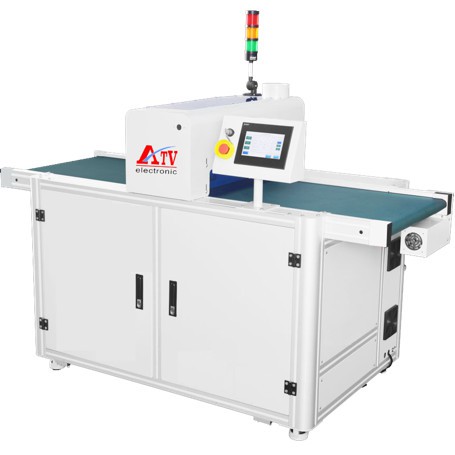
The physical size of the Atmospheric Roller Plasma Equipment is the most obvious factor determining the floor space it occupies. Different models of our equipment come in various dimensions, which are designed to meet different production needs. For example, a smaller model might be suitable for a laboratory or a small - scale production line, while a larger one is more appropriate for high - volume industrial production. The length, width, and height of the equipment all contribute to the overall floor space requirement. -
Accessories and Peripherals
In addition to the main equipment, there are often accessories and peripherals that need to be considered. These may include power supplies, gas cylinders, control panels, and cooling systems. Each of these components takes up additional space. For instance, gas cylinders need to be stored in a safe and well - ventilated area, and the control panel should be placed within easy reach of the operators. -
Operator Space
Adequate space must be provided for operators to access and operate the equipment safely. This includes space for opening doors, performing maintenance tasks, and moving around the equipment. Safety regulations also require a certain amount of clearance around the equipment to prevent accidents. -
Workflow and Material Handling
The layout of the production line and the flow of materials also impact the floor space. If the equipment is part of a continuous production process, there needs to be enough space for the incoming and outgoing materials. For example, if the Atmospheric Roller Plasma Equipment is used to treat a continuous roll of material, there should be space for the material to be unwound before treatment and rewound after treatment.
Typical Floor Space Requirements
The floor space occupied by Atmospheric Roller Plasma Equipment can vary significantly depending on the specific model and configuration. On average, a small - to - medium - sized Atmospheric Roller Plasma Equipment may require a floor space of around 5 - 10 square meters. This includes the space for the main equipment, accessories, and some operator space.
For larger industrial - scale models, the floor space can range from 15 - 30 square meters or even more. These larger models are often equipped with more advanced features and higher - capacity components, which require more space for installation and operation.
It's important to note that these are just rough estimates, and the actual floor space requirement should be determined based on the detailed specifications of the equipment and the specific requirements of the production environment.
Comparison with Other Atmospheric Plasma Equipment
When considering the floor space, it's also useful to compare Atmospheric Roller Plasma Equipment with other types of atmospheric plasma equipment, such as Atmospheric Belt - Type Plasma Equipment and Atmospheric Conveyor - Type Plasma Equipment.
Atmospheric Belt - Type Plasma Equipment typically has a relatively long and narrow footprint, as it is designed to treat materials on a moving belt. The floor space requirement depends on the length of the belt and the width of the treatment area. In general, it may require a similar amount of floor space as the Atmospheric Roller Plasma Equipment, but the layout may be different.
Atmospheric Conveyor - Type Plasma Equipment is often used for treating larger and heavier materials. It usually has a larger floor space requirement due to the size of the conveyor system and the associated handling equipment.
Planning for Floor Space
When planning to install Atmospheric Roller Plasma Equipment in your facility, it's essential to conduct a detailed site assessment. Here are some steps to help you plan for the floor space:

-
Review the Equipment Specifications
Obtain the detailed dimensions of the equipment and its accessories from the supplier. This will give you a clear idea of the physical size of the equipment and the space it will occupy. -
Consider the Production Process
Analyze the production process and determine how the equipment will fit into the overall workflow. Consider the flow of materials, the access for operators, and the maintenance requirements. -
Account for Future Expansion
If you plan to expand your production capacity in the future, it's advisable to leave some extra space for potential upgrades or additional equipment. -
Ensure Compliance with Safety Regulations
Make sure that the floor space meets all the relevant safety regulations, including clearance requirements, ventilation, and fire safety.
Conclusion
The floor space occupied by Atmospheric Roller Plasma Equipment is influenced by multiple factors, including the equipment dimensions, accessories, operator space, and workflow. By carefully considering these factors and conducting a thorough site assessment, you can ensure that the equipment is installed in a suitable space that meets your production needs and safety requirements.
If you are interested in our Atmospheric Roller Plasma Equipment and would like to discuss the floor space requirements or other aspects of the equipment, please feel free to contact us. Our team of experts is ready to provide you with detailed information and support to help you make the best decision for your business.
References
- Industry standards for plasma equipment installation and safety.
- Internal product specifications of Atmospheric Roller Plasma Equipment.