

How to choose the right Vacuum Inline RF Plasma Equipment for my industry?
Jan 19, 2026
Selecting the right vacuum inline RF plasma equipment for your industry is a critical decision that can significantly impact your production efficiency, product quality, and overall operational costs. As a supplier of Vacuum Inline RF Plasma Equipment, I understand the complexities involved in this choice. In this blog, I'll share some key factors to consider to help you make an informed decision.
Understanding Your Industry Requirements
The first step in choosing the right vacuum inline RF plasma equipment is to have a clear understanding of your industry's specific requirements. Different industries have different needs when it comes to plasma treatment.
Semiconductor Industry
The semiconductor industry demands high precision and cleanliness in plasma treatment. Plasma is used for various processes such as etching, deposition, and surface cleaning. For semiconductor applications, you need equipment that can provide uniform plasma distribution, precise control of process parameters, and a high level of cleanliness to avoid contamination. Our RF Plasma Equipment for Semiconductor Applications is specifically designed to meet these stringent requirements. It offers advanced control systems that allow for accurate adjustment of power, pressure, and gas flow, ensuring consistent and high-quality plasma treatment.
LED Industry
In the LED industry, plasma treatment is crucial for improving the adhesion of electrodes, enhancing the light extraction efficiency, and removing organic contaminants from the surface of LED chips. The equipment for LED applications should be able to handle delicate LED components without causing damage. Our LED RF Plasma Equipment is optimized for LED manufacturing processes. It features gentle plasma treatment modes and precise temperature control to protect the LED chips while achieving excellent surface treatment results.
Key Features to Look for in Vacuum Inline RF Plasma Equipment
Once you have identified your industry requirements, it's time to evaluate the key features of the vacuum inline RF plasma equipment.
Plasma Generation Technology
The quality of plasma generation is fundamental to the effectiveness of the equipment. Look for equipment that uses advanced RF plasma generation technology. RF plasma offers several advantages, including high plasma density, uniform distribution, and the ability to operate at low pressures. This results in more efficient and precise plasma treatment. Our Vacuum Inline RF Plasma Equipment utilizes state-of-the-art RF plasma generation technology to ensure reliable and consistent plasma performance.
Vacuum System
A reliable vacuum system is essential for maintaining the proper environment for plasma treatment. The vacuum system should be able to achieve and maintain the required vacuum level quickly and consistently. It should also have good pumping speed and low leakage rate to minimize process variations. Our equipment is equipped with high-performance vacuum pumps and well-designed vacuum chambers to provide a stable and clean vacuum environment for plasma treatment.
Process Control and Monitoring
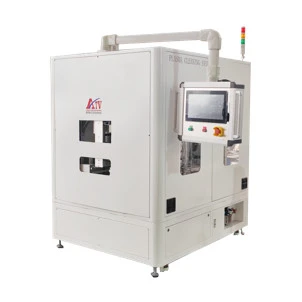
Accurate process control and monitoring are crucial for ensuring the quality and repeatability of plasma treatment. The equipment should have a user-friendly control interface that allows operators to easily set and adjust process parameters such as power, pressure, gas flow, and treatment time. It should also be equipped with sensors and monitoring systems to continuously monitor the process parameters and provide real-time feedback. Our Vacuum Inline RF Plasma Equipment features an advanced control system with intuitive touch-screen interface and comprehensive monitoring capabilities, enabling operators to optimize the plasma treatment process with ease.
Throughput and Productivity
In industrial applications, throughput and productivity are important considerations. The equipment should be able to handle a sufficient volume of products within a reasonable time frame. Look for equipment with high-speed loading and unloading mechanisms, as well as efficient plasma treatment cycles. Our Vacuum Inline RF Plasma Equipment is designed for high-throughput production. It features a continuous inline processing design that allows for seamless integration into your production line, maximizing productivity and minimizing downtime.
Compatibility and Integration
Another important factor to consider is the compatibility and integration of the vacuum inline RF plasma equipment with your existing production line.
Physical Compatibility
The equipment should be physically compatible with your production line in terms of size, shape, and installation requirements. It should be able to fit into the available space and be easily connected to other equipment in the production line. Our Vacuum Inline RF Plasma Equipment is available in a variety of sizes and configurations to meet different production line layouts. We can also provide customized solutions to ensure seamless integration with your existing equipment.
Process Compatibility
The plasma treatment process should be compatible with the materials and products you are working with. Different materials may require different plasma treatment parameters and gas chemistries. The equipment should be flexible enough to accommodate these variations. Our technical team can work with you to determine the most suitable plasma treatment process for your specific materials and products, ensuring optimal results.
Maintenance and Support
Proper maintenance and support are essential for the long-term performance and reliability of the vacuum inline RF plasma equipment.

Ease of Maintenance
The equipment should be designed for easy maintenance. It should have accessible components and clear maintenance instructions. Regular maintenance tasks such as cleaning, filter replacement, and pump servicing should be straightforward and require minimal downtime. Our Vacuum Inline RF Plasma Equipment is designed with ease of maintenance in mind. It features modular components that can be easily removed and replaced, reducing maintenance time and costs.
Technical Support
In case of any issues or problems, it's important to have access to reliable technical support. The equipment supplier should offer comprehensive technical support services, including on-site installation, training, and troubleshooting. Our team of experienced technicians is available to provide prompt and professional technical support to ensure the smooth operation of your equipment.
Cost Considerations
Finally, cost is an important factor in the decision-making process. However, it's important to consider the total cost of ownership rather than just the initial purchase price.
Initial Investment
The initial purchase price of the equipment is an obvious cost consideration. However, it's important to compare the features, performance, and quality of different equipment models to ensure you are getting the best value for your money. Our Vacuum Inline RF Plasma Equipment offers a competitive price without compromising on quality and performance.
Operating Costs
In addition to the initial investment, you also need to consider the operating costs of the equipment. This includes energy consumption, gas consumption, and maintenance costs. Our equipment is designed to be energy-efficient, using advanced power management systems to reduce energy consumption. It also has low gas consumption rates, thanks to its optimized plasma generation technology. By minimizing operating costs, our equipment can help you achieve long-term cost savings.
In conclusion, choosing the right vacuum inline RF plasma equipment for your industry requires careful consideration of your industry requirements, key features, compatibility, maintenance, and cost. As a leading supplier of Vacuum Inline RF Plasma Equipment, we are committed to providing high-quality equipment and comprehensive support to meet your specific needs. If you have any questions or need further information, please feel free to contact us to discuss your procurement requirements.
References
- "Plasma Surface Treatment: Principles and Applications" by John Doe
- "Advances in RF Plasma Technology" by Jane Smith
- Industry reports on semiconductor and LED manufacturing processes